Plastic Modular Belts Explained: Materials, Surfaces and Pitch
Updated 6 October 2026 · ConveyPro Systems engineering team
In short: Polypropylene (PP) is the general-purpose choice for food and wet areas above about +5 °C; polyethylene (PE) for freezers and impact; acetal (POM) for strength, low friction and heavy or fast lines. Pick the surface for the job — flush grid to drain and cool, flat top for packs and containers, raised rib for clean transfers — and a small pitch where products must cross tight transfers.
How modular belts work
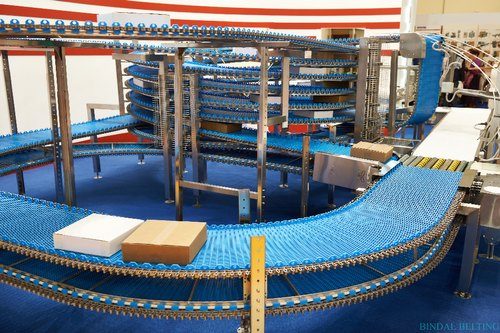
A plastic modular belt is built from injection-moulded modules joined by hinge rods and laid in a brick pattern to any width. Moulded sprockets drive it positively, so it cannot slip and does not need tensioning or tracking adjustment. Damaged modules can be replaced individually, and the open hinges make the belt easy to clean — which is why modular belts are common in food, beverage and packaging lines.
Choosing the material
Material
Typical temperature range
Strengths
Typical uses
Polypropylene (PP)
approx. +5 °C to +100 °C
Light, good chemical resistance, economical
General food processing, washing, cooling, packaging
Heavy loads, high speeds, accumulation, beverage and container lines
Nylon / special grades
Higher temperatures
Heat and abrasion resistance
Hot products, ovens and special applications
Temperature limits vary by grade and load — confirm them for your application, especially below +5 °C, where PP becomes brittle and PE or acetal is the safer choice.
Choosing the surface
Surface
What it does
Use it for
Flush grid (open)
Open area lets water, air and debris pass through
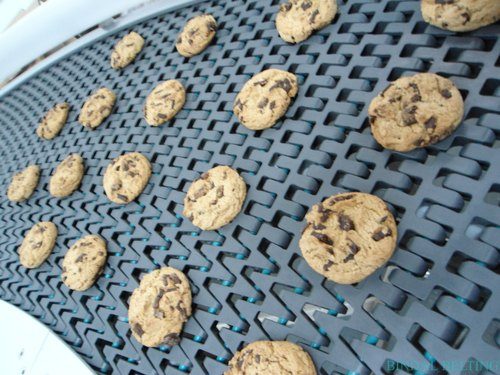
Washing, draining, cooling, freezing, vegetable and meat lines
Flat top (closed)
Smooth, closed surface
Packs, cartons, containers and small items that would fall through a grid
Perforated flat top
Closed surface with small holes
Drainage or vacuum hold-down with a flat carrying surface
Raised rib
Ribs mesh with finger transfer plates
Clean, smooth transfers of bottles and packs between conveyors
Friction top
Rubber-like inserts on the surface
Inclines and declines without products sliding
Roller top
Small rollers in the modules
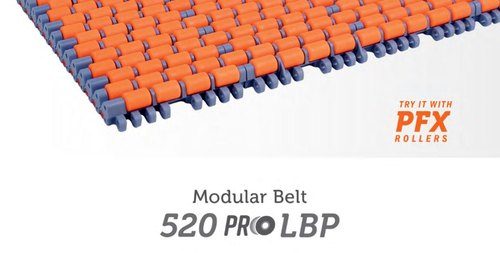
Low back-pressure accumulation and gentle diverting
Choosing the pitch
Pitch is the distance between hinge rods. Small pitches (around 12.7 mm) turn around small sprockets and nose bars, so small or unstable products can cross tight transfers — useful in bakery and packaging. Larger pitches (25.4 mm and 50.8 mm) are stronger and suit heavy loads, wide belts and robust washing or processing lines.
Practical tips
Use matching sprockets and wear strips — wear-strip material and layout affect belt life and noise
Allow for catenary sag on the return side; modular belts should not be tensioned like fabric belts
Check thermal expansion on hot or cold lines — the belt length changes with temperature
For metal-detection points, metal-detectable modules help catch broken fragments
Stainless hinge rods add strength; plastic rods keep the belt fully non-metallic
Information needed for a quote
Conveyor length and width, what is conveyed (weight, size, wet or dry, temperature), required surface, any curves or transfers, speed, and the existing sprocket or pitch if replacing a belt.
Frequently asked questions
Polypropylene (PP) is the most common choice for food processing above about +5 °C. For freezing and cold areas, polyethylene (PE) is used; for heavy or high-speed lines, acetal (POM).
Flush grid belts have an open surface that drains water and lets air through for washing and cooling. Flat top belts have a closed surface for packs, containers and small items that could fall through a grid.
No. They are positively driven by sprockets and should run with a slight catenary sag on the return side rather than being tensioned like a fabric belt.
Yes. Remove the hinge rod, replace the damaged modules and refit the rod — the rest of the belt stays in service.